
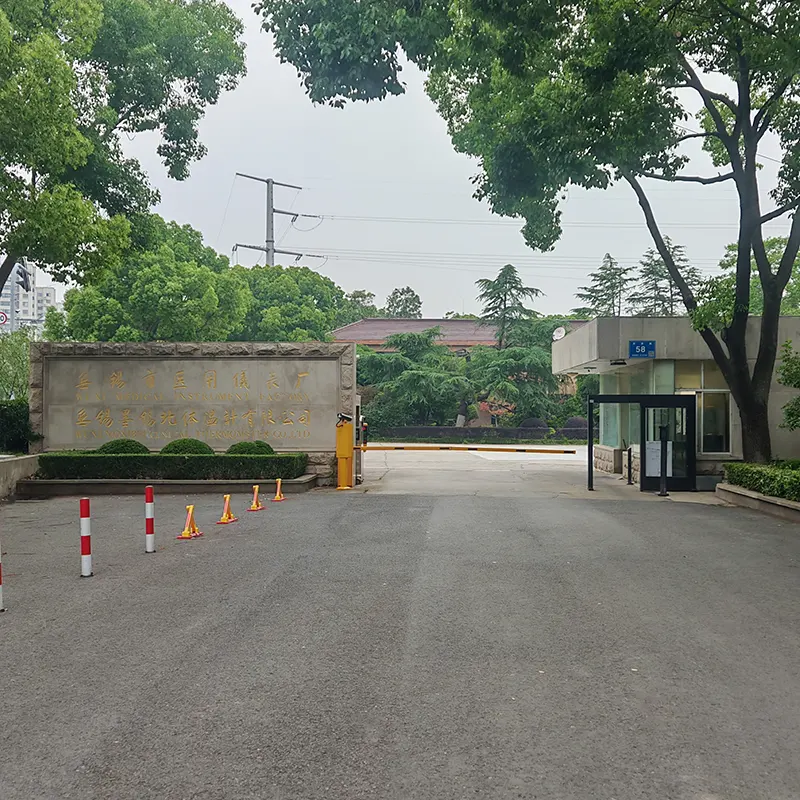
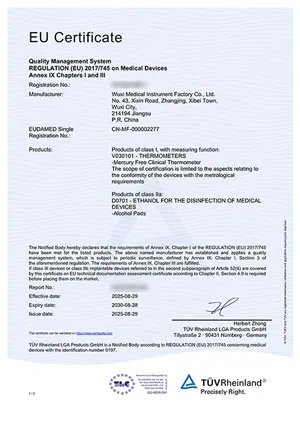
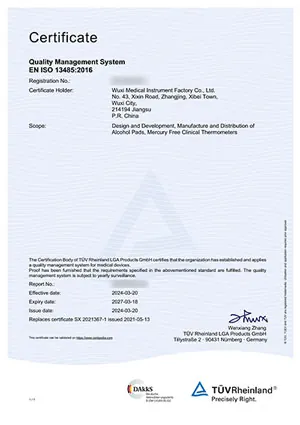
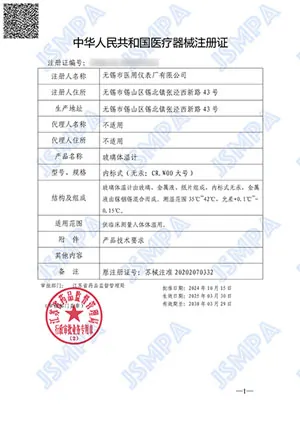
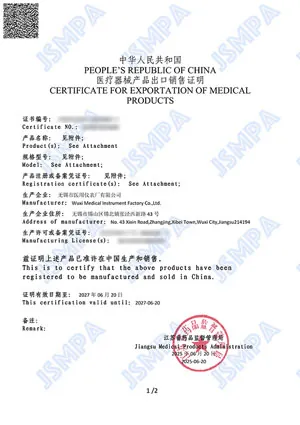
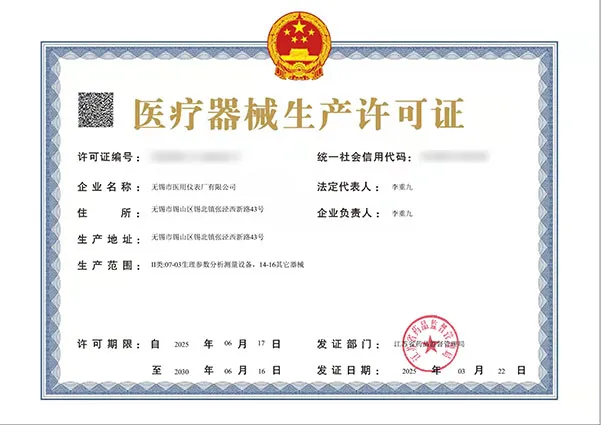
*Note: Certificates have been desensitized for confidentiality. Please contact us for full versions.
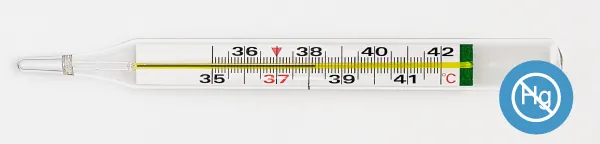
| Measuring range | 35.0 °C to 42.0 °C |
| Measurement accuracy | +0.1 °C / - 0.15 °C |
| Measurement tolerance | 0.1 °C |
| Intended purpose | medical glass thermometer for determining body temperature |
| Measuring locations | rectal, oral, axillar |
| Storage conditions | -10 °C to 42 °C |
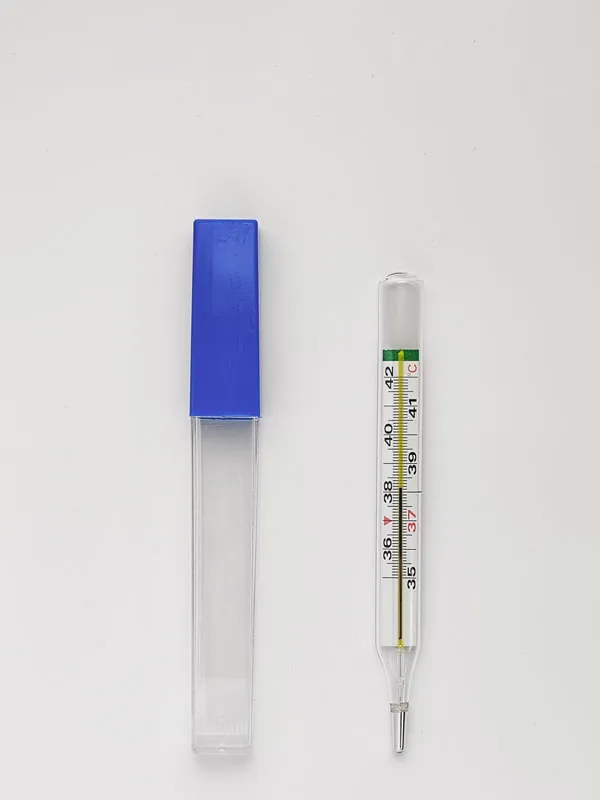
Includes:
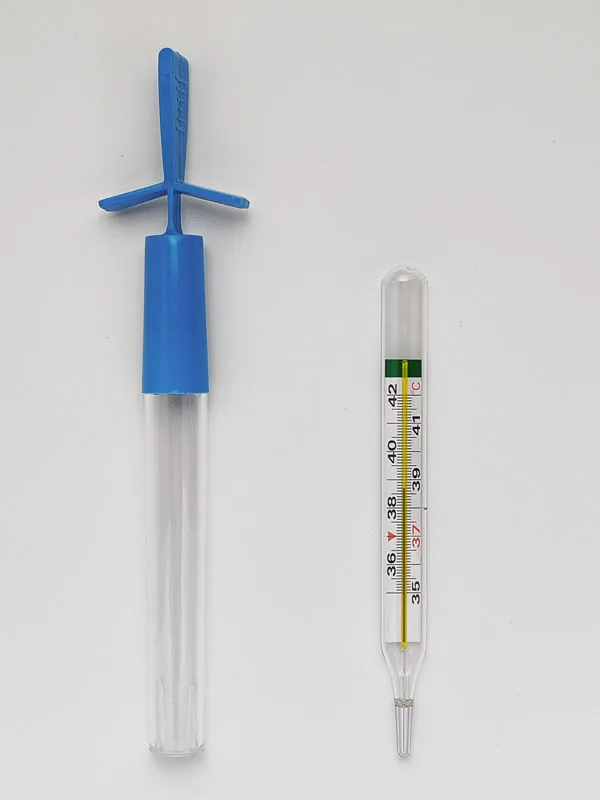
Includes:
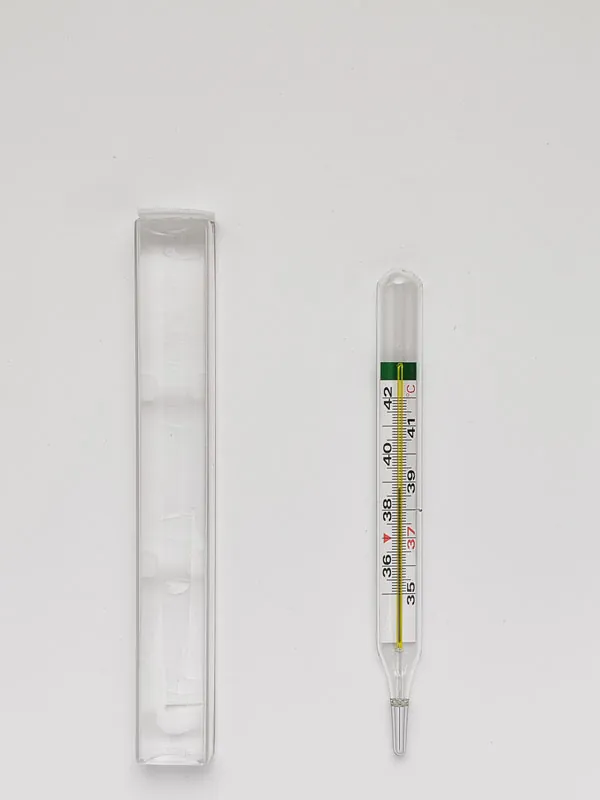
Includes:
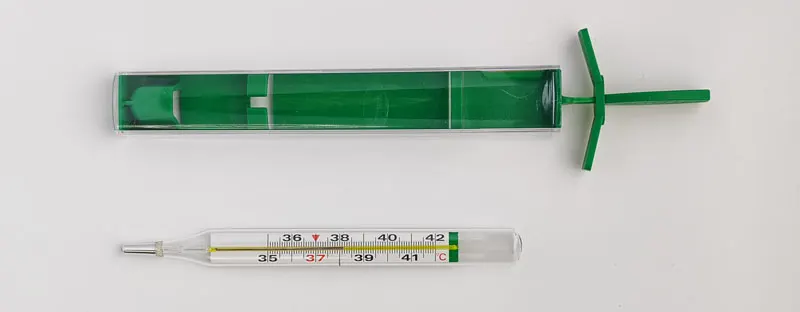
Includes:
| Item | Mercury-free Thermometer | Mercury Thermometer |
|---|---|---|
| Composition | In-Ga-Sn Alloy, safe & stable | Mercury, toxic |
| Safety | Non-toxic, no vapor risk | Breakage = mercury leak |
| Compliance | Globally approved | Banned in many countries |
| Environment | Eco-friendly | Pollution, special disposal |
| Applications | Home, schools, hospitals | Limited use |
| Item | Mercury-free Thermometer | Digital Thermometer |
|---|---|---|
| Accuracy | Stable and reliable | Affected by battery & sensor aging |
| Durability | Long-lasting glass structure | Battery required; may leak/age |
| Allergen Risk | Hypoallergenic (glass only) | Metal/plastic may cause irritation |
| Environmental Impact | No batteries, fully recyclable | Electronic waste + battery disposal |
| Cost of Use | One-time purchase, minimal cost | Ongoing battery & replacement costs |
| Item | Mercury-free Thermometer | Infrared Thermometer |
|---|---|---|
| Accuracy | Stable and reliable | Affected by battery & sensor stability |
| Durability | Long-lasting glass structure | Battery required; lifespan affected |
| Environmental Impact | Eco-friendly, reusable, no electronics | Contains electronics & battery; e-waste |
| Cost of Use | One-time purchase, minimal maintenance | Frequent battery replacement; higher long-term cost |
| Usage Scenario | Daily and clinical use | Quick screening only |
The mercury-free thermometer contains Indium–Gallium–Tin (In-Ga-Sn) alloy, which is non-toxic and does not release harmful mercury vapor. If it breaks, follow these steps:
1. Ventilate the room
Open the windows to ensure good air circulation.
2. Wear gloves
Avoid direct contact with the liquid alloy.
3. Collect the alloy liquid
Gently absorb the liquid with a tissue or absorbent material.
4. Pick up glass fragments
Use a dustpan and brush or a piece of cardboard to collect larger glass pieces. Do not pick them up with bare hands.
5. Clean the area and remove possible stains
The In-Ga-Sn alloy may leave grey-black marks if rubbed into the surface. These can be removed with standard household floor cleaners. Finally, wipe the area with a damp cloth to ensure no residue remains.
6. Dispose of the waste
Place the used tissues and glass fragments into a sealed bag and dispose of them with regular household waste.
💡 Tip: Although the thermometer contains no toxic mercury, broken glass can cause injury. Handle with care.
Before each use, the measuring liquid must be reset to below 35°C. You can do this in the following ways:
Using the shaking case (recommended)
If you purchased our shaking case, it helps you reset the thermometer easily and efficiently.
Resetting by hand (requires practice)
Precautions during resetting
💡 Tip: The shaking case makes resetting easier, safer, and more consistent - especially for first-time users.
The silver line at 38°C is a calibration mark added during manufacturing.
It indicates the exact 38°C position and ensures the accuracy of the thermometer scale.
The thermometer should be cleaned before and after each use.
Because it is a sealed glass device, it is very easy to clean and maintain.
For home use:
For better hygiene:
We also manufacture alcohol pads. Feel free to contact us for purchase.
A mercury-free thermometer can be used to measure temperature at the following body sites:
Tips:
Many customers who are new to mercury-free thermometers are surprised by their higher price compared to traditional mercury models. The main reasons include:
1. Higher raw material cost
Mercury-free thermometers use safe liquid alloys (gallium–indium–tin) instead of mercury. These environmentally friendly materials are more expensive and require stricter quality control.
2. More complex manufacturing process
The viscosity and thermal expansion of mercury-free liquids differ from mercury. To achieve the same measurement accuracy, manufacturers must use more precise glass processing, more accurate filling techniques, and stricter calibration procedures, resulting in higher production costs.
3. Higher quality and yield requirements
Due to the physical characteristics of mercury-free liquids, the production process must meet tighter control and testing standards. Ensuring stable readings and smooth liquid column movement requires stricter inspection, which increases the cost per unit.
4. Compliance with international environmental regulations
Mercury-free thermometers must comply with CE, REACH, and the Minamata Convention, which involve additional testing, certification, and compliance management costs. Meanwhile, traditional mercury thermometers are restricted or banned in many countries due to mercury hazards.